

MP-D Series
2L–10L listed model capacities · Evaluate for smaller cosmetic and personal-care containers
MEPER extrusion blow molding machines are used in the cosmetic packaging industry and are available in MP-D, MP-FS, and MP-FD series. With listed model capacities ranging from 2L to 20L, buyers can evaluate a suitable machine for plastic cosmetic and personal-care containers based on bottle design, material, mold dimensions, and required output.
MEPER's MP-D, MP-FS, and MP-FD product pages state that these extrusion blow molding machines are widely used in food packaging, pharmaceutical, and cosmetic applications. Compare the listed model capacities below, then confirm that the selected machine can produce your specific bottle design and material.
2L–10L listed model capacities · Evaluate for smaller cosmetic and personal-care containers
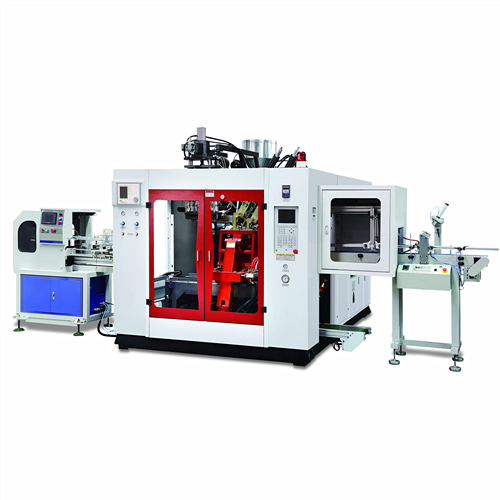
5L–20L listed model capacities · Confirm the required bottle dimensions and mold configuration

Series page lists 5L, 10L, and 20L models · Evaluate for production requirements that may benefit from multiple die heads
From shampoo and body wash bottles to larger personal care containers, MEPER extrusion blow molding machines support cosmetic and daily-care packaging production. The suitable model depends on container capacity, bottle design, material, and mold configuration.
Extrusion blow molding solutions for hollow plastic bottles used in shampoo, conditioner, and other hair-care products.
MP-D Series, maximum container capacity up to 10LPlastic containers for body lotion, body wash, and personal care products, subject to bottle design and mold compatibility.
MP-D Series, 2L–10L maximum capacity by modelBlow molding equipment for hollow plastic packaging used for liquid personal care and daily cleansing products.
MP-FS Series, 5L–20L maximum capacity by modelMP-FD series models offer multi-die configurations for projects requiring multiple containers per production cycle. Actual output depends on the mold, bottle size, and machine setup.
MP-FD Series, selected models up to 20L maximum capacityThe MP-55D has a maximum container capacity of 2L and can be evaluated for smaller personal care bottle projects after checking the required bottle dimensions and mold.
MP-55D, maximum container capacity 2LFor special bottle shapes, material requirements, or production targets, discuss the container design and process requirements with MEPER to determine a suitable machine configuration.
Capacity and configuration depend on the selected modelAnswers to common questions about cosmetic bottle production, machine selection, materials, output, and bottle quality.
Hourly output depends on the molding cycle, number of cavities or die heads, bottle size, cooling time, and reject rate. A useful estimate is: good bottles per hour = 3,600 ÷ cycle time in seconds × bottles produced per cycle × good-product rate. For example, a 10-second cycle producing 2 bottles per cycle at a 95% good-product rate yields approximately 684 good bottles per hour. Ask the manufacturer to validate the estimate using your actual bottle design.
MEPER's MP-D series product information lists PE, PP, PVC, and PA as processable materials, while material options for other models should be checked against their individual specifications. Do not assume that a machine suitable for PE shampoo bottles can also process PET cosmetic bottles. Before ordering, identify the exact resin grade and confirm processing compatibility, bottle-wall requirements, and whether the selected extrusion system and mold are suitable for that material.
For 100 ml–500 ml shampoo, lotion, or body wash bottles, choose a machine according to the plastic material, bottle dimensions, neck finish, mold compatibility, and required production rate. PE and PP bottles are commonly considered for extrusion blow molding, while PET bottles often require a different process, such as injection stretch blow molding. MEPER lists the MP-55D with a maximum container capacity of 2 L, but this maximum does not automatically confirm suitability for every small cosmetic bottle. Provide the manufacturer with your bottle drawings, material, neck dimensions, and target hourly output before selecting a model.
Extrusion blow molding forms a molten plastic tube that is inflated inside a mold and is commonly suitable for hollow PE or PP containers such as shampoo and body wash bottles. Injection blow molding first forms a preform around a core rod and then blows it into the final shape; it can offer better control of the neck finish for suitable small containers. The best process depends on the resin, bottle geometry, neck precision, production volume, and tooling budget. Compare mold and equipment costs using the same bottle specification, and consider injection stretch blow molding separately if your packaging requires PET.
Uneven wall thickness can result from inconsistent parison programming, unsuitable melt temperature, poor mold alignment, uneven cooling, or a bottle design that distributes material unevenly. Start by checking temperature stability and parison thickness settings, then inspect mold alignment and cooling conditions. During a trial run, measure wall thickness at several points, such as the shoulder, body, and base, and compare the results with your product specification. Test at least 30 consecutive bottles as an initial screening sample, while recognizing that a larger sample may be needed to validate long-run process stability; agree on the acceptable thickness variation with the manufacturer before mass production.
MEPER offers multiple extrusion blow molding machine series for manufacturing plastic cosmetic bottles, including shampoo, conditioner, lotion, and body wash bottles. Choose a suitable model based on bottle material, size, neck design, and production requirements.
The MP-D, MP-FS, and MP-FD series offer different maximum bottle capacities and configurations. The appropriate model depends on your cosmetic bottle dimensions, mold design, and target production output.
MEPER's product descriptions specify clamping and guide systems designed for blow molding operations. Confirm the selected model's specifications and test bottle quality, including wall thickness and dimensional consistency, before mass production.
MEPER product pages describe PLC and touch-screen control with automatic temperature control. These features support process adjustment during cosmetic bottle production; confirm the exact control functions available on your selected machine.
Share your shampoo, lotion, or body wash bottle drawings, plastic material, bottle capacity, neck dimensions, and hourly output target. MEPER can review the machine and mold requirements to help determine a suitable configuration.
Send MEPER your bottle drawing or sample, material, capacity, and target output. The team can review your requirements and advise which machine configuration should be evaluated.