
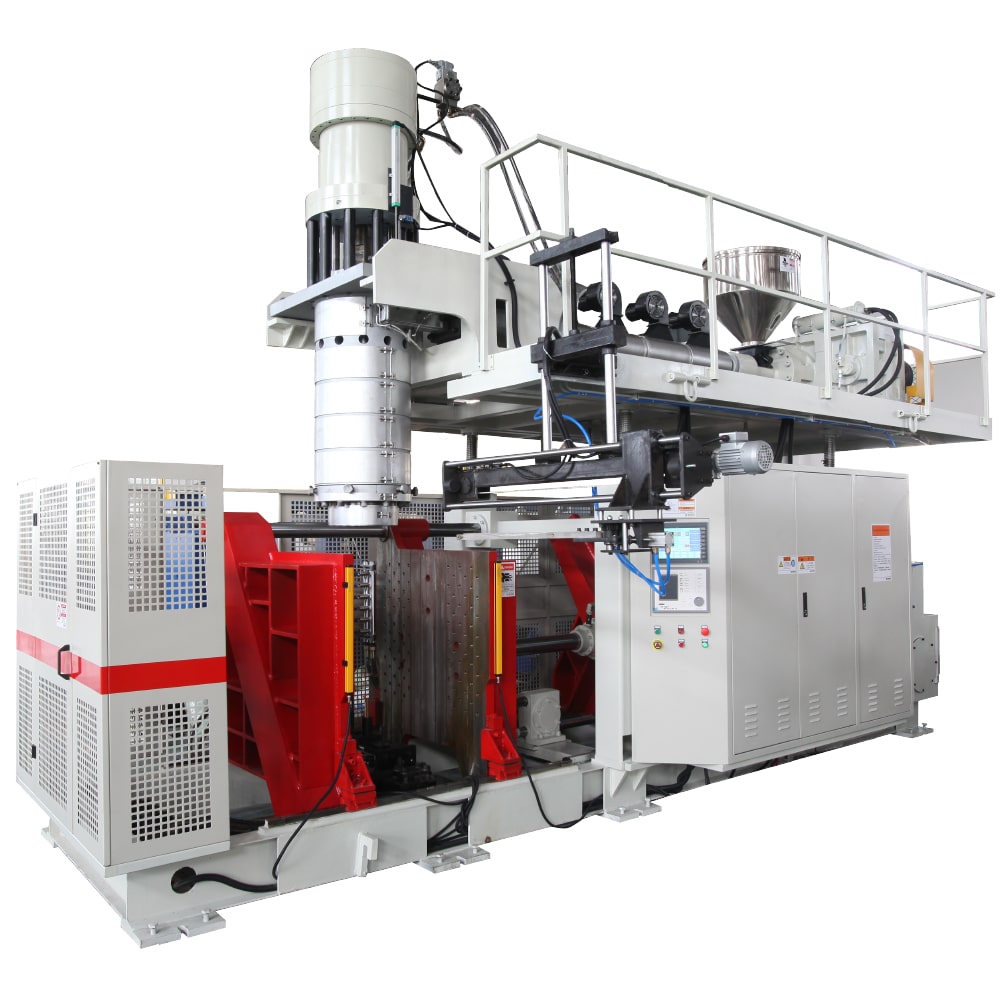
VNK-135 (1000L)
Large accumulator-head machine · highest-capacity VNK model listed
- Plasticizing capacity430 kg/h
- Accumulator volume40L
- Clamping force1200 kN
- Published mold size1050 × 1400 mm
Explore large accumulator-head extrusion blow molding machine options for custom hollow HDPE plastic pallets. Pallet production requires a dedicated mold and verification of platen dimensions, clamping force, accumulator capacity, and plasticizing output. MEPER’s published VNK models are primarily listed for hollow containers, so pallet compatibility must be confirmed with the manufacturer.
For hollow plastic pallet projects, start by checking the required pallet dimensions, product weight, mold envelope, and target output. The following MEPER VNK accumulator models are potential machines to discuss with the manufacturer; their published container-capacity ratings do not confirm pallet-production capability.
Large accumulator-head machine · highest-capacity VNK model listed
Accumulator-head machine · alternative for technical evaluation
Accumulator-head machine · evaluate for smaller custom designs only
Hollow plastic pallets serve warehousing, logistics, manufacturing, and reusable transport systems. Machine suitability depends on the pallet drawing, mold structure, material weight, and confirmed equipment capability.
Hollow HDPE pallets for warehouse storage, forklift handling, distribution centers, and reusable transport systems. Confirm mold dimensions and clamping capacity.
VNK-135: first model to evaluate; compatibility unconfirmedCustom pallets for machinery, automotive components, and industrial materials. Check pallet weight, wall design, mold size, and required load rating.
VNK-135: first model to evaluate; compatibility unconfirmedReusable pallets for export packaging and returnable transport. Common footprints include 1200 × 1000 mm, 1200 × 800 mm, and 1100 × 1100 mm; mold fit must be checked.
VNK-120: alternative for mold-fit reviewPallets used to move packaged food, beverage cases, and supplies. Consider cleanability, material suitability, and the actual pallet load requirements.
Machine selection requires confirmationPallets for transporting chemical drums, resin bags, and packaged raw materials. Evaluate the resin grade, load distribution, and operating environment.
VNK accumulator series; pallet suitability unconfirmedFor custom hollow pallet designs, submit the product drawing and target output so the manufacturer can verify the machine, mold envelope, shot weight, and clamping requirements.
VNK-135: 1000L container rating, not pallet capacityFind practical answers about machine prices, production capacity, molding processes, recycled materials, and machine selection for plastic pallet manufacturing.
A plastic pallet blow molding machine may be advertised at around US$160,000–320,000, depending on its configuration, production capacity, and automation level. However, this is an indicative range from public supplier listings, not a verified global transaction price. Before comparing quotations, confirm whether the price includes the pallet mold, auxiliary equipment, automatic trimming, installation, commissioning, and shipping. Request separate prices for the machine and mold so you can calculate the actual investment required to start production.
Actual production output depends on pallet weight, extrusion or accumulation time, cooling, demolding, trimming, and rejected parts. A machine advertised with a dry-cycle speed of 120 cycles per hour does not mean it will produce 120 finished pallets per hour, because dry cycling does not represent the complete molding process. To estimate production, use the formula: good pallets per hour = 3,600 ÷ actual cycle time in seconds × good-part rate. For example, a 120-second cycle theoretically allows 30 cycles per hour; at a 95% good-part rate, output is approximately 28.5 accepted pallets per hour. Ask suppliers to verify cycle time and good-part rate using your actual pallet mold and material rather than relying on headline specifications.
Blow molding is generally worth evaluating for hollow, double-wall pallet designs, while injection molding is commonly used for solid-wall or rib-reinforced pallet structures. The better option depends on pallet geometry, target weight, required static and dynamic loads, tooling investment, production volume, and acceptable cycle time. Do not compare the processes using machine price alone: request quotations for the complete machine, mold, auxiliary equipment, and estimated operating costs for the same pallet specification. Ask both suppliers to produce or validate a sample and compare pallet weight, dimensions, load-test results, cycle time, and labor requirements. This side-by-side comparison provides a more reliable decision than assuming one process is always cheaper or more productive.
Some blow molding systems can process suitable recycled HDPE, but performance depends on the material's melt flow properties, contamination, moisture, additives, and batch consistency. Do not assume that all recycled HDPE is suitable simply because the machine is designed for HDPE. Ask the supplier to test your intended recycled-material grade and blend ratio, then evaluate extrusion stability, wall-thickness distribution, surface defects, cycle time, and finished-pallet load performance. If recycled material is part of your cost-saving plan, include the test results in the purchase acceptance criteria.
A single machine may produce different pallet designs if its clamping force, mold space, shot capacity, and plasticizing output meet the requirements of each product. However, a heavier pallet generally requires more material per shot and may increase cooling time, so the same machine will not necessarily achieve the same output rate across all designs. Provide the supplier with the target pallet weight, dimensions, material grade, and required static, dynamic, and racking loads, then request a model-specific feasibility assessment and production trial before confirming the order.
MEPER provides extrusion blow molding equipment for industrial plastic pallet projects. For hollow plastic pallet production, the technical team can evaluate your pallet dimensions, weight, structural design, and load requirements to determine whether a suitable machine configuration is feasible.
Submit your pallet drawings, dimensions, target weight, and design type, such as double-sided or nine-leg pallets, to assess the machine and mold requirements for your specific product.
Verify the mold dimensions, platen size, opening stroke, and clamping force against the complete pallet mold design. The finished pallet footprint alone is not enough to confirm compatibility.
Confirm the required shot weight, HDPE plasticizing capacity, accumulator volume, cooling time, and target cycle time to estimate the achievable output for your specific pallet design.
Ask MEPER to confirm pallet-production compatibility in writing and evaluate sample performance against your required static, dynamic, and racking loads before finalizing the machine configuration.
Send us your pallet drawing, dimensions, weight, material, and target output. We can review the required specifications and confirm whether a listed VNK model is suitable.